Atoms To Go
by Black Cat Systems
v7.0.0
·
Updated 4 months ago
·
6.42 Mb
·
Released Oct 2012
Key Features
📦
Batch Processing
🤖
AI Powered
💻
Code Editor
🖥️
Terminal / CLI
🪟
Window Manager
🧮
Calculator
About Atoms To Go
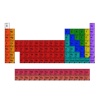
Atoms To Go is the complete software periodic table of the elements. In addition to the usual information, Atoms To Go also contains a wealth of nuclear information on each isotope, including half life, decay mode, and daughter products.
Theres a handy chart of the nuclides, showing all of the isotopes, about 1600 of them. Clicking on one takes you to detailed data for that isotope, such as half life, decay mode, alpha/beta/gamma energies, and daughter products.
A molecular weight calculator makes it easy to find the molecular weight of compounds. A shaded diagram showing the ranges of physical properties makes it easy to visualize relationships across the periodic table.
X-ray data (fluorescence and binding energies) is included, as well as photon interaction (mean free path) values. Electron shell information and alpha particle energies are also listed. In addition you can view the visible spectra, and get a table of wavelengths and relative amplitudes. Just click on one of the elements in the periodic table.
Data is displayed for the following physical properties:
Density
Heat of Vaporization
Heat of Fusion
Specific Heat
Thermal Conductivity
Linear Expansion Coefficient
Melting Point
Boiling Point
Atomic Radius
Covalent Radius
Bulk, Shear, Youngs Modulus
Poisson Ratio
Brinell, Mohs, and Vickers hardness data
Magnetic Susceptibility
Electrical Resistivity
Electron Affinity
Electric Dipole Polarizability
State (gas, liquid, solid)
Photoelectric Work Function
Electronegativity
Crystal Structure
Abundance in Earths Crust
Abundance in Earths Sea
Abundance in Earths Atmosphere
Abundance in Solar System
Number of Isotopes
Number of Naturally Occuring Isotopes
Number of Stable Isotopes
Photon Interactions
Visible Light Spectra
Magnetic Dipole Moment
Electric Quadrupole Moment
Nuclear Spin